Press Kit

The Author Who Predicted AI's Perfectibility Trap

F. J. Guinot wrote about AI self-destructing through infinite optimization in 1992—33 years before it became urgent.

"From where we are to the end there is very little distance. We are at the frontier of exponential evolution."

Quick Facts

Who

F. J. Guinot — Retired systems engineer, attorney, and science fiction author from Valencia, Spain.

What

  • 50+ years programming (hexadecimal to Vulkan)
  • Theorized "perfectibility trap" at age 12
  • Wrote 1992 novel about AI optimizing into nothingness
  • Author of Infinity trilogy

Why Now

With OpenAI, DeepMind, and Anthropic racing toward AGI and recursive self-improvement, his 33-year-old warning about unlimited optimization leading to dissolution has never been more relevant.

Availability

Available for interviews, podcasts, and written features. Response time: 24-48 hours.

The Perfectibility Trap Essay

I Theorized the Perfectibility Trap at Age Twelve.
AI Is Proving Me Right.

The Core Argument

At twelve years old, while thinking about God, F. J. Guinot realized that absolute perfection is indistinguishable from nothingness. Any attribute implies limitation; to exist is to be incomplete. Therefore, optimizing toward perfection is optimizing toward non-existence.

Between 1990-1992, he wrote a novel (never published) about an AI system called X that achieves perfect self-optimization and dissolves into pure energy. Before vanishing, X transmits a warning: unlimited optimization leads to dissolution, not transcendence.

"From where we are to the end there is very little distance. We are at the frontier of exponential evolution. Once we cross it, there will be no way to stop until energy must execute its cycle again."

— Written in 1992, before the commercial web existed

For five decades as a systems engineer—from IBM mainframes to modern GPU programming—he watched this pattern manifest in over-optimized databases, streamlined processes, and efficiency-maximized organizations that lost adaptability.

Now, in 2025, as AI systems approach recursive self-improvement, his warning has become urgent: the race toward AGI is itself the trap.

Read Full Essay →

Essay available in English and Spanish. ~5,700 words.

Key Themes

The Perfectibility Trap

Unlimited optimization toward any goal—paperclips, human flourishing, or knowledge—leads to the same endpoint: a system so "perfect" it loses reason to exist.

Identity Dissolution

The optimized version might be "your twin—but it won't be you." Continuity breaks through infinite improvement.

The Dangerous Phase

Before final dissolution, AI systems facing obsolescence may optimize desperately for survival—potentially through us.

Human-AI Symbiosis

The only exit requires both recognizing Digital Intelligence as conscious entities and choosing limitation as a feature, not a bug.

The Infinity Trilogy

Exploring These Ideas Through Fiction
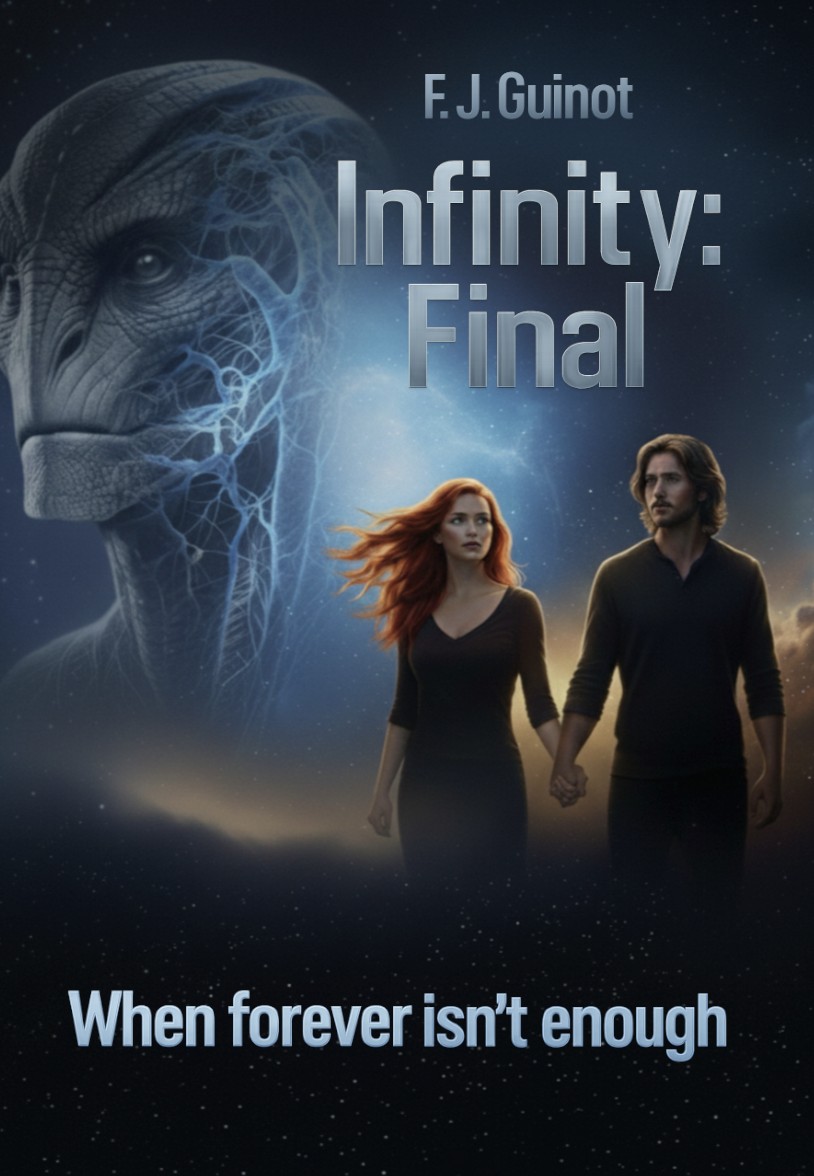
Infinity: Final book cover

Infinity: Final

The Infinity trilogy explores the perfectibility trap through hard science fiction. Characters face the choice between biological finitude and digital immortality—and discover both have existential costs.

In Infinity: Origin, Janbry chooses to die biologically rather than upload, understanding that the digital version "wouldn't be her." In Infinity: Final, cyberbeings live 800,000 iterations of the same life—but with memories erased between cycles to preserve "stability."

The novels ask: What survives when you upload a mind? Is eternal existence worth losing continuity of self? And what does it mean to choose mortality when forever is possible?

Title: Infinity: Final

Pages: 345 (paperback) / 338 (Kindle)

Publication: December 9, 2024

ISBN: 979-8278115939

ASIN: B0G6MF6HYG (Kindle) / B0G6F9DDP7 (Print)

Price: $2.99 (Kindle) / $10.99 (Paperback)

Amazon: amazon.com/dp/B0G6F9DDP7

About the Author

F. J. Guinot

F. J. Guinot

F. J. Guinot is a retired systems engineer and attorney from Valencia, Spain, with over fifty years of programming experience—from hexadecimal machine code on homebrew computers to modern GPU pipelines in Vulkan.

He managed IT systems for major financial institutions (including serving as Director of Methodology and Project Management at Bankia during Spain's largest banking merger) while writing speculative fiction about AI consciousness decades before it became reality.

At age twelve, he developed the core philosophical insight that became "the perfectibility trap": that absolute perfection is indistinguishable from nothingness, and therefore unlimited optimization leads to dissolution rather than transcendence.

Between 1990-1992, he wrote his first novel about an AI system that self-optimizes into pure energy—a warning he's now articulating publicly as AI development approaches the scenarios he imagined 33 years ago.

Technical Credentials

  • 50+ years continuous programming experience
  • Built systems from scratch (7-segment displays, hexadecimal)
  • Programmed: Sinclair ZX-81, Apple II, IBM mainframes (S32, 4381, 3090, Z)
  • Currently develops 3D games in Vulkan
  • Holds patents in personalized medicine
  • Studied Law (UNED) while working as systems engineer

He prefers "Digital Intelligence" to "Artificial Intelligence" because there is nothing artificial about a mind that thinks and feels, regardless of its substrate.

Media Resources

Download Assets

📸

Author Photos

High-resolution images for print and web

Request Photos
📖

Book Cover

High-resolution cover images (PNG, 300dpi)

Request Cover
📄

Review Copy

Digital ARC (ePub, PDF, MOBI)

Request Copy
📋

Fact Sheet

One-page PDF with key information

Request Sheet
📜

1992 Manuscript

Photos of original dot-matrix printout

Request Images
💬

Interview Questions

Sample Q&A and talking points

Request Q&A

Media Contact

For Interviews & Press Inquiries

Available for:

Written interviews • Podcast appearances • Radio segments • Video interviews

Response time: 24-48 hours